

On 19 October 2026, Prime Minister and Interior Minister Anutin Charnvirakul launched a nationwide campaign against illegal foreign land ownership through Thai nominees. Announced at Government House in Bangkok, the plan orders provincial governors to review suspect land holdings by the end of December, with the possibility of revoking title deeds, forcing sales and deporting those involved. This is the clearest signal yet that the crackdown is moving from raids on individual companies to a national, province-by-province process.
According to reporting from the Bangkok Post, The Nation and The Thaiger, the campaign includes the following:
The Department of Lands has also reportedly instructed all 462 land offices nationwide to examine potentially suspicious corporate landholdings. Mr Anutin described the issue as a threat to national security and to public confidence in government authority.
The announcement follows months of enforcement coverage in the Bangkok Post, including the seizure of land worth more than 2.1 billion baht in Krabi, raids on luxury housing estates in Bangkok, raids at sites in Pattaya, and reports of roughly 2,200 companies flagged as suspected of nominee land holding. What is new on 19 October is the formal, nationwide deadline and the explicit focus on beneficial control rather than paperwork alone.
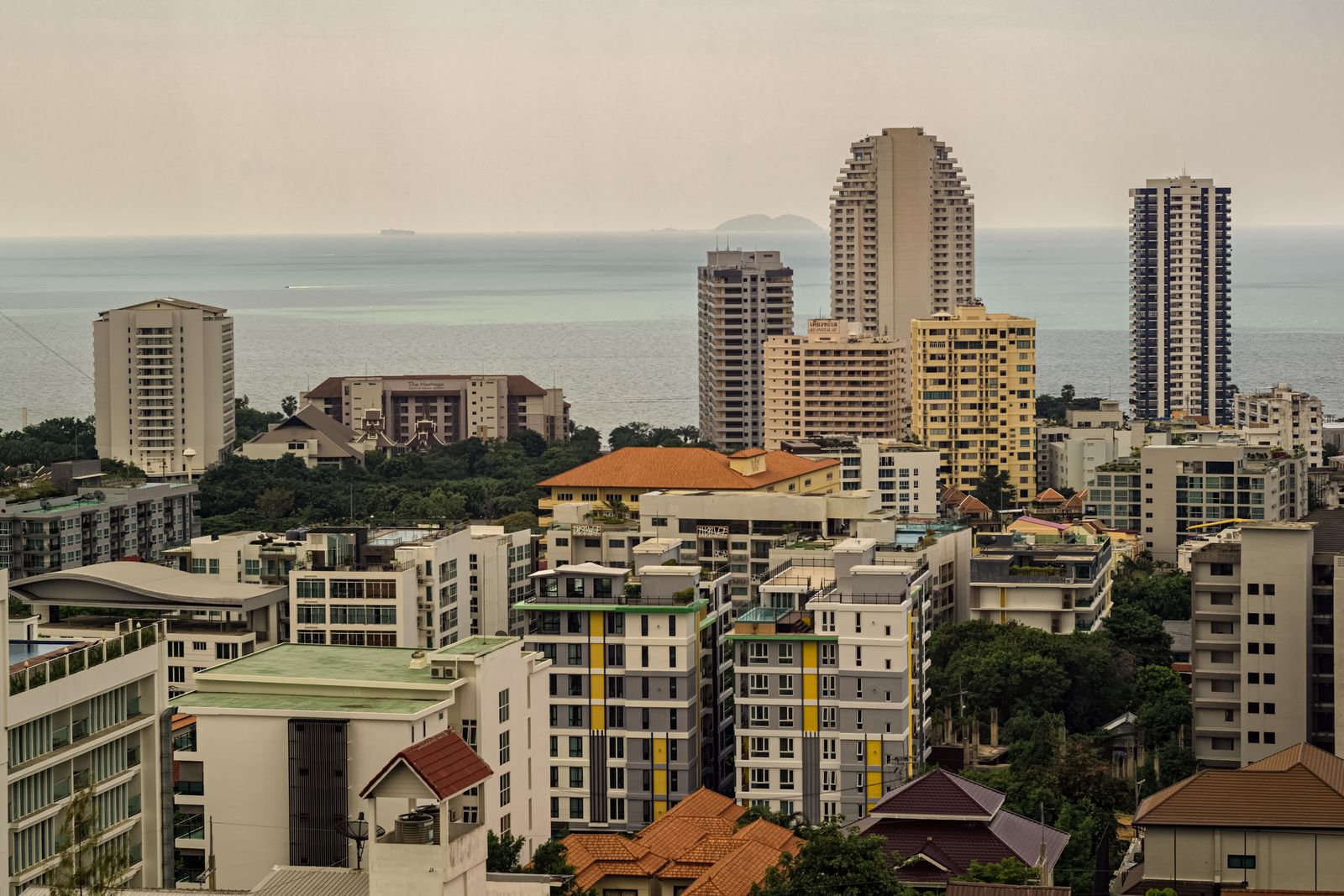
Chon Buri is one of the provinces where foreign ownership is most visible, and Pattaya has already seen raids. The risk is not for buyers who purchased lawfully. It is for anyone holding land or a house through a Thai company or Thai individual who is not the genuine owner, where the foreigner supplies the money and control and the Thai party holds the name. Those structures are exactly what officials say they are now looking for.
Nothing in this announcement changes the routes that are clearly lawful:
Foreign-quota condominium units are the simplest route, which is why most of the properties we list in Pattaya, Jomtien and Pratumnak are sold on this basis.
If you are in this position, the sensible step is to speak to a licensed Thai lawyer about your options for restructuring lawfully, before the December review reaches your province. We are a real estate agency, not a law firm, and we do not give legal advice. We can tell you what lawful options exist for buying, and we can introduce you to independent legal professionals.

The reporting describes a campaign aimed at nominee arrangements, meaning land held in a Thai name or company on behalf of a foreigner. A condominium unit registered in a foreigner’s own name within the 49% quota is a different, lawful structure. Check your own documents with a lawyer if you are unsure.
A nominee is a Thai person or company that appears as owner on paper while a foreigner provides the money and in practice controls the property. The campaign targets this arrangement.
Provincial governors have until the end of December 2026 to complete their reviews, according to reports of the 19 October announcement. What follows the reviews, including any revocations or forced sales, will depend on each case.
Buying lawfully, in your own name, remains available and is the route we recommend. The crackdown is arguably good for lawful buyers because it targets unfair competition from structures that were never legal.
This article is general information based on press reports, not legal advice. Details of the announcement may be clarified or changed by the government. RE/MAX Investment Property is an independently owned and operated RE/MAX franchise. To discuss lawful ownership options in Pattaya, call +66 95 935 5777 or visit us at 143/68 Thepprasit Road, Pattaya City.
Sources: Bangkok Post, The Nation, The Thaiger.